Practical life activities Montessori classrooms offer play a key role in building independence from an early age. At Kinderhaus Montessori, children learn real skills through simple daily tasks that feel meaningful and purposeful. These activities are not random; instead, they are carefully designed to help children develop coordination, focus, and responsibility. As a result, children begin to trust their abilities and take pride in their work. This confidence grows steadily and supports long-term success both in school and at home.
What Practical Life Activities Really Teach
Practical life activities Montessori environments focus on everyday actions like pouring, cleaning, dressing, and organizing. Therefore, children do not just play; they learn how to function independently in real situations. These tasks may seem simple, but they build strong foundations.
Each activity has a clear beginning, middle, and end. In other words, children complete a full process and see results immediately. This structure helps them understand order and sequence. At Kinderhaus Montessori, these experiences create a sense of achievement that motivates children to continue learning.
When children repeat these tasks, they refine movement and improve accuracy. Consequently, their coordination becomes more controlled. This physical development also supports mental focus.
Building Independence Through Daily Practice
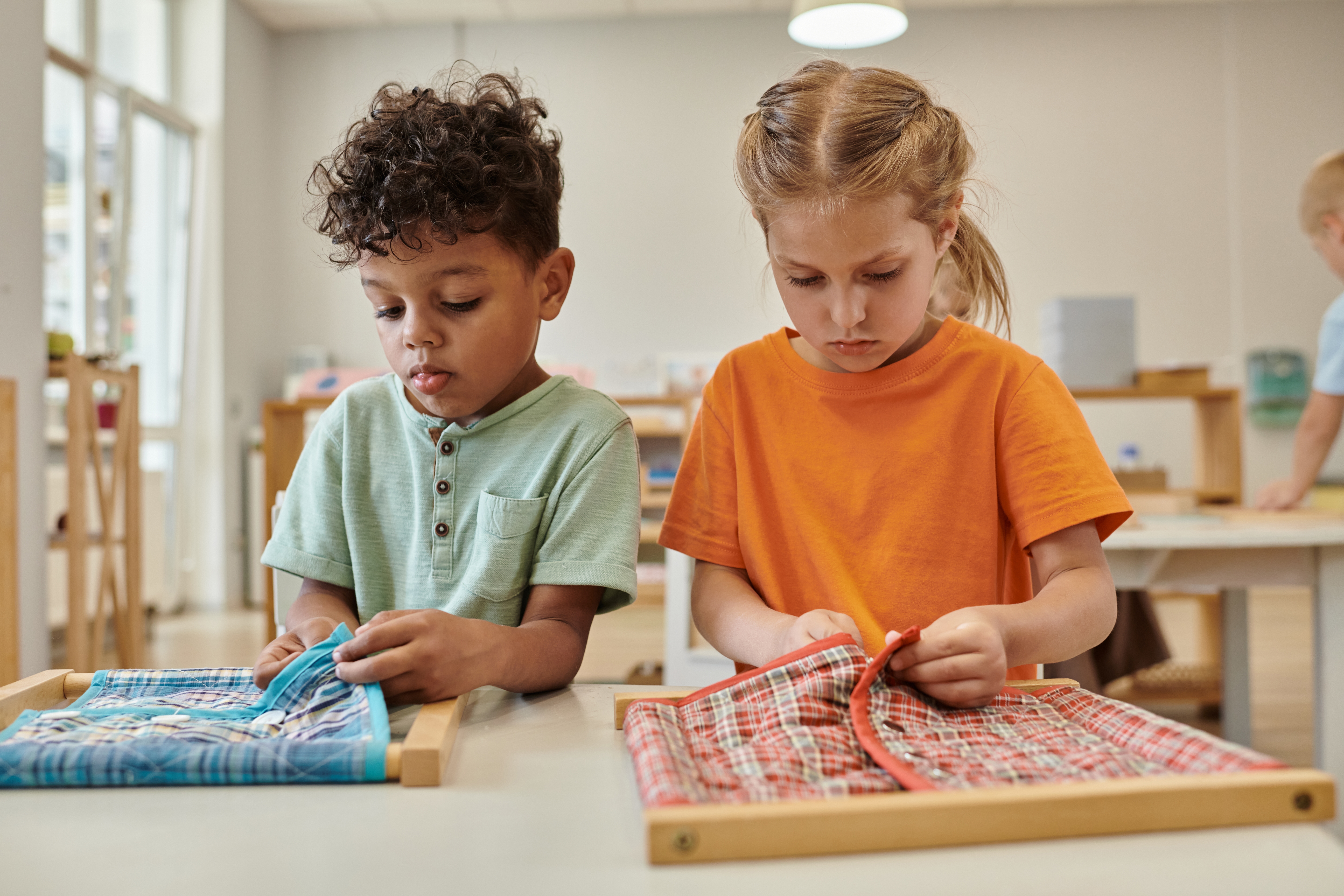
Children want to do things on their own. Practical life activities Montessori classrooms provide safe ways to develop this independence. For example, a child may learn to button a shirt or prepare a small snack. These moments build real confidence.
Instead of constant help, children receive guidance only when needed. Therefore, they learn to solve problems without frustration. This approach encourages persistence and patience. At Kinderhaus Montessori, teachers observe and support without interrupting the learning process.
Independence is not rushed. It grows step by step through consistent practice. As a result, children begin to take responsibility for their actions and choices.
Why Movement and Coordination Matter in Early Learning
Movement plays a central role in learning. Practical life activities Montessori environments use controlled movements to strengthen both body and mind. For instance, carrying objects carefully or pouring water requires focus and balance.
These activities improve fine motor skills and hand-eye coordination. In addition, they prepare children for writing and other academic tasks. At Kinderhaus Montessori, movement is not separate from learning; it is part of it.
Children also develop awareness of their surroundings. They learn how to move carefully, avoid spills, and respect shared spaces. This awareness builds discipline and self-control over time.
How Practical Life Connects to Real-World Skills
Practical life learning goes beyond the classroom. Children apply these skills at home and in daily routines. For example, they may help set the table, organize toys, or clean up after activities. Therefore, learning feels useful and relevant.
Parents often notice increased responsibility. Children begin to take initiative without being asked. This behavior builds strong habits that last into adulthood.
To better understand how these skills fit into a larger learning approach, explore montessori education. It explains how real-life tasks support overall development.
The Importance of a Prepared Environment
A prepared environment allows children to succeed independently. Materials must be child-sized, organized, and easy to use. Therefore, children can complete tasks without confusion or frustration.
At Kinderhaus Montessori, every activity is placed with intention. Children know where to find materials and where to return them. This order creates a calm and focused space.
When children care for their environment, they develop respect and responsibility. In addition, they feel a sense of ownership over their space. This connection encourages consistent engagement.
To see how structured learning environments support different stages, review the available programs.
How Confidence Grows Through Meaningful Work
Confidence does not come from praise alone. Practical life activities Montessori classrooms give children real work with visible results. For instance, cleaning a table or completing a task successfully builds pride.
Children see what they can do, not just what they are told. Therefore, their confidence becomes internal rather than dependent on approval. At Kinderhaus Montessori, this approach helps children develop a strong sense of self.
Over time, children begin to approach new challenges with curiosity instead of fear. This mindset supports long-term learning and personal growth.
As children grow, they continue developing these skills in more advanced environments like the academy. This ensures consistent progress and deeper understanding.
Encouraging Responsibility and Respect in Daily Life
Responsibility starts with small actions. Practical life activities Montessori environments teach children to care for themselves, others, and their surroundings. Therefore, respect becomes part of daily behavior.
Children learn to wait their turn, share materials, and complete tasks fully. In addition, they understand the importance of cleaning up after themselves. These habits create a positive and respectful community.
At Kinderhaus Montessori, children practice these values every day. This consistent experience builds strong social skills and emotional awareness.
Families can also support this growth through participation in school activities. You can explore opportunities through events that connect learning with community experiences.
Practical life activities Montessori classrooms use continue to shape confident, capable, and independent children. These early lessons stay with them as they grow and take on new challenges.
FAQs
What are practical life activities in Montessori?
They are daily tasks like pouring, cleaning, and dressing that help children develop independence and coordination.
Why are practical life activities important for children?
They build confidence, improve focus, and teach responsibility through real-life experiences.
At what age do children start practical life activities?
Children usually begin around age two or three, depending on their readiness and development.
How do these activities help with school readiness?
They improve concentration, coordination, and independence, which are essential for academic success.
Can practical life skills be practiced at home?
Yes, simple tasks like cleaning, organizing, and helping with meals support learning at home.